The Chimney Breast Decision: What to Establish Before Removing a Victorian Fireplace
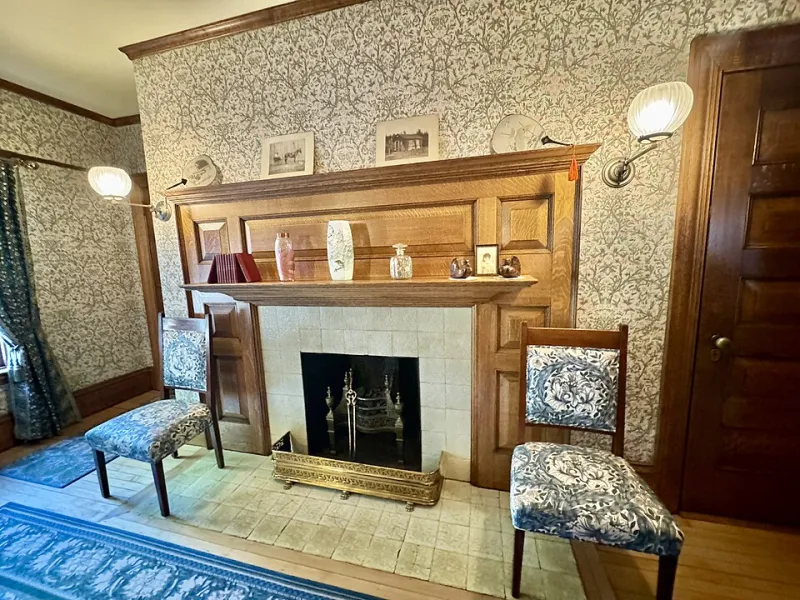
Photo: w_lemay, CC BY-SA 2.0, via Wikimedia Commons
The fireplace is often the first thing a renovator notices in a Victorian or Edwardian home. It may be handsome, damaged, painted over or entirely hidden behind later additions. It can also be the first thing a builder is asked to remove. That instinct is understandable, particularly in a small sitting room where every square metre matters, but it deserves more scrutiny than it usually receives.
A chimney breast is part of the structure and history of a period house. Removing it, opening it up or altering it can affect the chimney, the flue, the room above and, in some cases, the legal status of the building. Before any work begins, there are practical questions that should be answered in a sensible order.
Establish what you actually have
Begin by identifying the fireplace rather than assuming its age or origin. Victorian and Edwardian houses were often altered in the twentieth century, and a fireplace that looks original may be a later insertion. Look at the surround, the insert, the hearth and the brickwork behind. Check whether the chimney breast is original to the house or a later addition. Look for evidence of previous openings, blocked flues or repaired brickwork.
It is also worth checking whether the fireplace appears in any surviving plans, deeds or early photographs. Local archives and conservation officers can sometimes help. This is not merely antiquarian interest. Knowing what you have helps you decide whether restoration, sensitive alteration or removal is the more considered route.
Survey the chimney before the aesthetics
The chimney is the part of the system that matters most and the part most often ignored. A chimney that is unsound will not become sound simply because the fireplace has been removed. In fact, removing a fireplace can expose or destabilise parts of the flue that were previously hidden.
A qualified chimney survey should assess the condition of the stack, the flue lining, the gather above the fireplace and the ventilation of the chimney. Look for damp, efflorescence, soot staining and loose mortar. If the chimney is shared with a neighbour, check the party wall position and any shared stack issues. In older houses, the chimney may serve several fireplaces, some of which may have been blocked without proper ventilation.
Understand flue function and ventilation
A fireplace is not simply a hole in the wall. It is part of a ventilation system. If you remove the fireplace and close the opening, the chimney still needs to breathe. Blocking a flue without allowing ventilation can lead to condensation, damp and deterioration of the chimney fabric. If you open up a fireplace, the flue must be suitable for the intended use, whether that is an open fire, a wood-burning stove or a decorative opening.
This is where advice from a qualified sweep or chimney engineer is valuable. They can confirm whether the flue is lined, whether it is suitable for the appliance you have in mind and what remedial work is required. Do not rely on a visual check from ground level or a builder's general assessment.
Check consent before you commit
Before any physical work, establish whether the property is listed or sits within a conservation area. In England and Wales, listed building consent is required for alterations that affect the special architectural or historic interest of a listed building. Conservation area consent rules are different, but demolition or alteration of a chimney breast can still require permission. In Scotland and Northern Ireland, separate consent regimes apply.
Even where consent is not required, the local authority may have design guidance. A conservation officer can be a useful ally if approached early with a clear proposal. Removing a chimney breast without consent can create enforcement problems and may affect a future sale. If the property is in a terrace or shares a chimney stack, the Party Wall etc. Act 1996 may also be relevant.
Cost the reinstatement, not just the removal
Removal often looks cheaper than it is. The visible work of taking out a fireplace is only part of the project. The chimney breast may need structural support above, the flue may need capping or lining, the remaining wall may need making good, and the floor and skirting will need repair. In many cases, reinstating a fireplace later is more expensive than restoring the original one now.
Ask for a cost plan that includes making good, plastering, decorating, structural work and any consent fees. If the chimney is shared, consider the neighbour's position and any access requirements. If the intention is to create alcove storage or a media wall, factor in the cost of achieving a genuinely integrated result rather than a boarded-over opening.
Consider restoration as a design decision
Restoration is not automatically the right answer, but it is often more flexible than homeowners expect. A damaged surround can be repaired, a painted one stripped, and a missing insert sourced from a architectural salvage yard. A fireplace can also be simplified: a plain opening with a stone hearth and a stove can feel contemporary without erasing the history of the room.
In a period property, the chimney breast often provides a natural focal point and a useful depth to the room. It can support shelving, a mirror or a piece of art. Removing it may create a flatter wall, but it can also leave a room without an anchor. The more considered choice is usually the one that works with the proportions of the house rather than against them.
A phased approach for cautious renovators
If you are unsure, do not rush to demolition. Start with a survey, a chimney inspection and a conversation with the local conservation officer if relevant. Make the fireplace safe and weathertight, then live with the room for a season. You may find that the fireplace is more useful than you assumed, or that a modest alteration solves the problem without losing the original fabric.
When removal may be reasonable
There are circumstances in which removal is defensible: where the chimney breast is structurally unsound and repair is disproportionate, where the fireplace is a later addition of no particular merit, or where a well-considered scheme requires the space. Even then, the work should be specified properly and consented where necessary.
The guiding principle is simple. A Victorian or Edwardian fireplace is not just a decorative object to be kept or discarded. It is part of a chimney system, a structural element and a piece of the house's history. Establish the facts before you rip it out, and the decision you make will be more likely to serve the room, the building and your future plans.