When the Light Draws In: Layering a South-Facing Sitting Room for Late Autumn
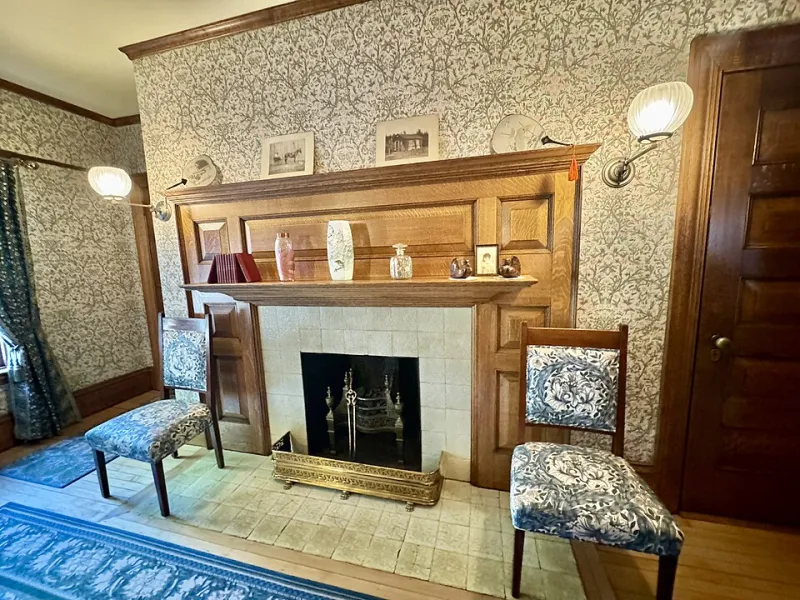
Photo: warm layered lamp lighting in elegant British living room autumn evening, via urbansketchingworld.com
A south-facing living room can feel like a gift in June and a puzzle in November. The sun still arrives, but it sits low, skims the furniture and disappears behind neighbouring rooflines far earlier than the room seems to expect. By the time the clocks have changed and the first grey afternoons of November 2026 settle in, the space that felt airy in summer can read as flat, shadowy and oddly uninviting. The answer is rarely a stronger central pendant. It is a more thoughtful plan.
At BBK Interiors, we treat lighting as part of the architecture of a room rather than a last-minute purchase. In a south-facing sitting room, the aim after the clocks change is not to imitate daylight. It is to support the room through the late afternoon and evening with layers that feel calm, useful and deliberate.
Begin with the room's natural rhythm
Before buying a single lamp, spend a week noticing how the room actually behaves. Where does the last useful daylight fall? Which corners go dull first? Is there a chair that becomes impossible to read in by four o'clock? A south-facing room often has a bright rear wall and a much darker internal corner, particularly if the ceiling is high or the window is wide.
Note the times when the room changes character. In November, that shift can happen surprisingly early. The objective is to place light where the room needs it at that moment, rather than illuminating the centre of the ceiling and hoping the rest follows.
Build a perimeter of low light
A single overhead fitting tends to flatten a room. It lights the top of the table, casts shadows under the furniture and leaves the corners unconvincing. A more considered approach is to create a perimeter of low-level light around the seating area.
A floor lamp beside the main sofa is the obvious starting point, but it should be chosen for the height of the shade and the direction of the light. An opaque shade that throws light up and down will feel more generous than a small, glaring bulb. A side table lamp at elbow height gives useful light for reading without lighting the whole room. A slim lamp on a console or in an alcove can lift a dark internal corner without drawing attention to itself.
Where space allows, a low table lamp or a pair of small lamps on a sideboard can create a subtle horizon of light across the room. The effect is sociable rather than theatrical, and it allows the eye to rest.
Choose bulbs with care
Bulb temperature matters more than many homeowners expect. In a living room used in the evening, a warm white of around 2700K is usually the most forgiving. Cooler temperatures can make timber look grey and fabrics feel thin, particularly against the blue-grey light of a winter afternoon.
Equally important is the quality of the light. Look for good colour rendering so that wool, linen and painted joinery retain their depth. Dimmable lamps are valuable in a south-facing room because they allow the lighting to follow the day rather than jumping from off to full brightness. If dimming is not possible, use lower-output bulbs in decorative fittings and reserve brighter light for task lamps.
Treat windows as part of the lighting plan
Window treatments do more than keep in heat. In late autumn, they frame the fading view and control how much of the room is dominated by the cold blue light outside. Heavy curtains drawn early can make a room feel cosy, but they can also make it feel closed too soon. A layered approach is often more flexible: a sheer or light blind to soften the window by day, with curtains that can be drawn as the light goes.
If the room has a wide south-facing window, consider where the curtains stack when open. A curtain that covers part of the glass in daytime steals the very light the room depends on. Wall-mounted tracks or a ceiling recess can allow the curtains to sit clear of the glazing and make the window feel larger.
Use reflection without shine
Reflective surfaces are useful in dark months, but the aim is a quiet gleam rather than a showroom sparkle. A mirror placed opposite or adjacent to the window can carry the last of the daylight into the room. Antique or smoked glass is often more forgiving than a large, bright mirror in a south-facing room, where low winter sun can create glare.
Metallic finishes should be chosen with the same restraint. Brushed brass, aged bronze and soft pewter add warmth without competing with the light. Polished chrome can feel cold in a north-facing room and over-bright in a south-facing one when the sun is low. A tray, a lamp base or a small side table is often enough to introduce reflection.
Layer textiles for warmth and acoustic softness
Lighting is only part of the evening atmosphere. Textiles absorb sound and soften the edges of a room, which becomes more important when the windows are closed and the lighting is low. A wool rug, lined curtains, a textured throw and a couple of well-filled cushions can make a sitting room feel furnished rather than merely decorated.
In a south-facing room, avoid relying solely on cool-toned linens in winter. They can look beautiful in strong summer light but feel austere in November. Introduce warmer neutrals, muted ochre, soft rust or deep green through cushions and throws, and keep the larger upholstery relatively calm so the room does not become busy.
A practical evening sequence
A useful test is to set the room for three different moments. First, late afternoon: leave the curtains open, use a floor lamp and perhaps a table lamp, and allow the last daylight to do some of the work. Second, early evening: draw the curtains, switch on two or three low lamps and dim them to a comfortable level. Third, late evening: reduce to one or two pools of light, perhaps a reading lamp and a low lamp in the corner, so the room signals rest rather than activity.
This sequence is more effective than a single bright switch because it gives the room a gradual evening. It also makes the space feel considered without making it feel staged.
What to avoid
Avoid placing lamps directly in front of a dark window, where they will create a mirror effect after dusk. Avoid relying on a single pendant as the only source of light, even if it is beautiful. Avoid cool white bulbs in lamps used for relaxing, and avoid overfilling the room with small light sources that create visual clutter rather than calm.
The most successful winter lighting plans are not the most elaborate. They are the ones that place light where life happens: beside the chair, above the side table, behind the sofa, and gently into the darker corners. In a south-facing room after the clocks change, that quiet discipline is what makes the space feel warm, useful and polished.