The Bed Is Not the Brief: Planning a Spare Room That Works Every Day
Most spare rooms are designed around a guest who visits twice a year. The bed arrives first, usually a double because it seems sensible, and everything else is arranged around it. The result is a room that is expensive to heat, awkward to use and, for the greater part of the calendar, simply closed. At BBK Interiors, we prefer to begin with a different question: what should this room do on an ordinary Tuesday?
Begin with a guest ledger
Before specifying furniture, keep a note for three months of how often the room is actually used for sleeping. Include family visits, friends passing through, children home from university and the occasional late-night overflow from a party. The arithmetic is often sobering. A room that hosts four nights a year does not need to be arranged around a permanent double bed; a room that hosts twenty may justify one. The distinction matters because the bed is the largest, least flexible object in the room and it will dictate everything else.
If the answer is that guests are rare but the room is needed for work, hobbies, quiet reading or storage, the brief should say so plainly. A spare room is not a museum of good intentions. It is square metres that must earn their keep.
Treat the bed as equipment, not architecture
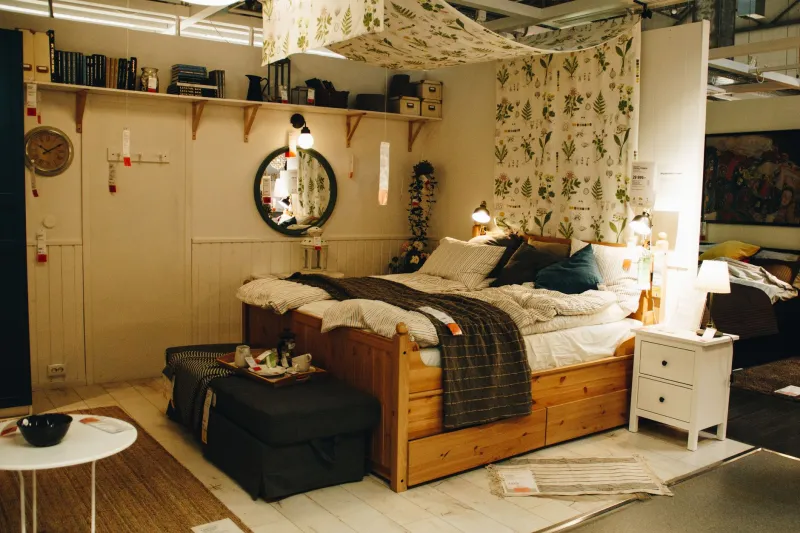
A permanent bed is not the only respectable option. A daybed with a proper mattress and drawers beneath can serve as a sofa for most of the year and a single bed for visitors. A sofa bed with a pocket-sprung mattress and a substantial frame will be comfortable enough for a weekend, though it should be tested before purchase; the cheap click-clack variety rarely survives scrutiny. A wall bed, properly fixed and with sufficient clearance, releases the floor entirely when not in use, but it requires forward planning and a wall that can take the weight. A single ottoman bed offers storage and a smaller footprint than a double, and may be the most sensible compromise in a box room.
The point is not to avoid beds but to avoid allowing one to become the organising principle of the room. If the bed can be folded, disguised or pushed to the wall, the space can change character without a renovation.
Three honest briefs
In a Victorian terrace, the spare room is often the smallest bedroom, perhaps three metres by two and a half. In that space, a clear brief is more useful than a mood board.
The study that hosts: a desk placed under the window, a daybed along the longest wall and a tall cupboard for files, coats and bedding. The room works daily as a study and occasionally as a guest room. The guest does not have to move a printer to reach the bed.
The hobby room with a foldaway: a wall bed on the least useful wall, a sturdy worktable, a pinboard and lockable storage for materials. The floor remains clear for projects. When guests arrive, the table is cleared and the bed comes down.
The quiet room: an armchair, a small table for a lamp and a cup, and a single bed with storage beneath. This is a room for reading, resting and the occasional overnight guest, not a second sitting room competing with the first.
Each brief accepts that the room cannot do everything. That is a strength, not a compromise.
Storage that earns its place
Spare rooms attract orphan furniture: a chest of drawers that no longer fits elsewhere, boxes of photographs, spare bedding, a suitcase. Without a plan, these objects colonise the floor and the room becomes a cupboard with a bed in it.
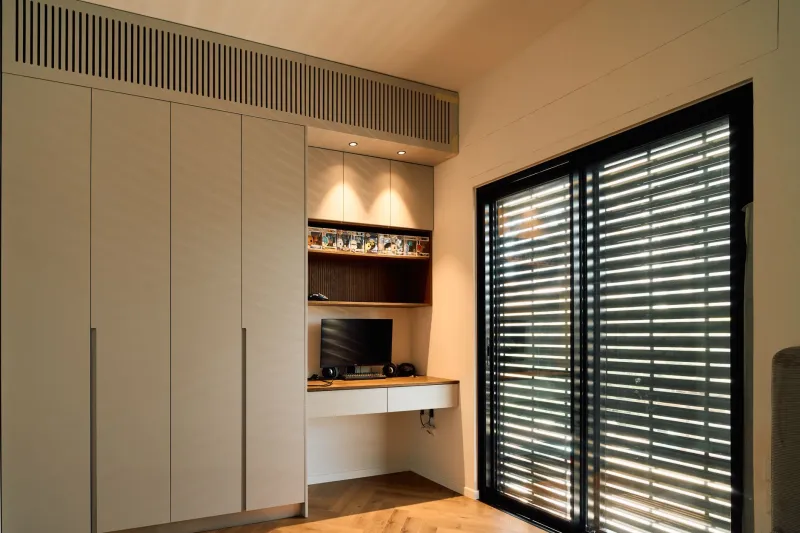
Full-height joinery on the least useful wall is usually the best investment. Shallow cupboards of thirty to thirty-five centimetres will hold linen, games and paperwork without projecting into the room. Hanging space needs around fifty-five to sixty centimetres of depth; anything deeper is wasted. A mixture of drawers, shelves and a hanging rail will accommodate guests and everyday storage without turning the room into a wardrobe.
Leave some clear floor. A room packed to the walls feels smaller, not more efficient, and guests need somewhere to put a suitcase or a bag.
The guest test
When the room is used for sleeping, the guest should not have to improvise. A bedside surface, a reading light, a mirror, a hook or hanging space, a accessible socket and a stool for a bag are the minimum. Blackout at the window and a radiator that is not blocked by the bed will matter more than decorative cushions.
Keep a small box of useful items: a spare toothbrush, a phone charger, a hairdryer. It is a modest gesture that makes the room feel considered rather than spare.
Light and warmth
A north-facing box room can feel cold and dim even in summer. Layer the lighting: a ceiling fitting for general light, a wall light or lamp beside the bed for reading, and a desk lamp if the room is used for work. Dimmable bulbs are worth the small extra cost. A blind or curtain that actually covers the window will do more for guest comfort than a decorative valance.
Plan for change
Rooms evolve. A spare room may become a nursery, a teenager's study or a downstairs bedroom in later years. Furniture that can be moved, sold or repurposed is therefore more valuable than a fully fitted scheme that assumes one version of family life. If built-in storage is used, keep it adaptable: adjustable shelves, a hanging rail that can be removed, and a layout that does not depend on a particular bed position.
The spare room is not a problem to be solved once. It is a room that should be reviewed as circumstances change. Begin with the honest ledger, choose furniture that can change with it, and resist the assumption that a bed must dominate. The result is a room that earns its place every week of the year, not only when someone comes to stay.